Kinetics and equilibrium: speed is not final composition
Separate how quickly a system changes from where its equilibrium lies, and interpret catalysis without mixing the two.
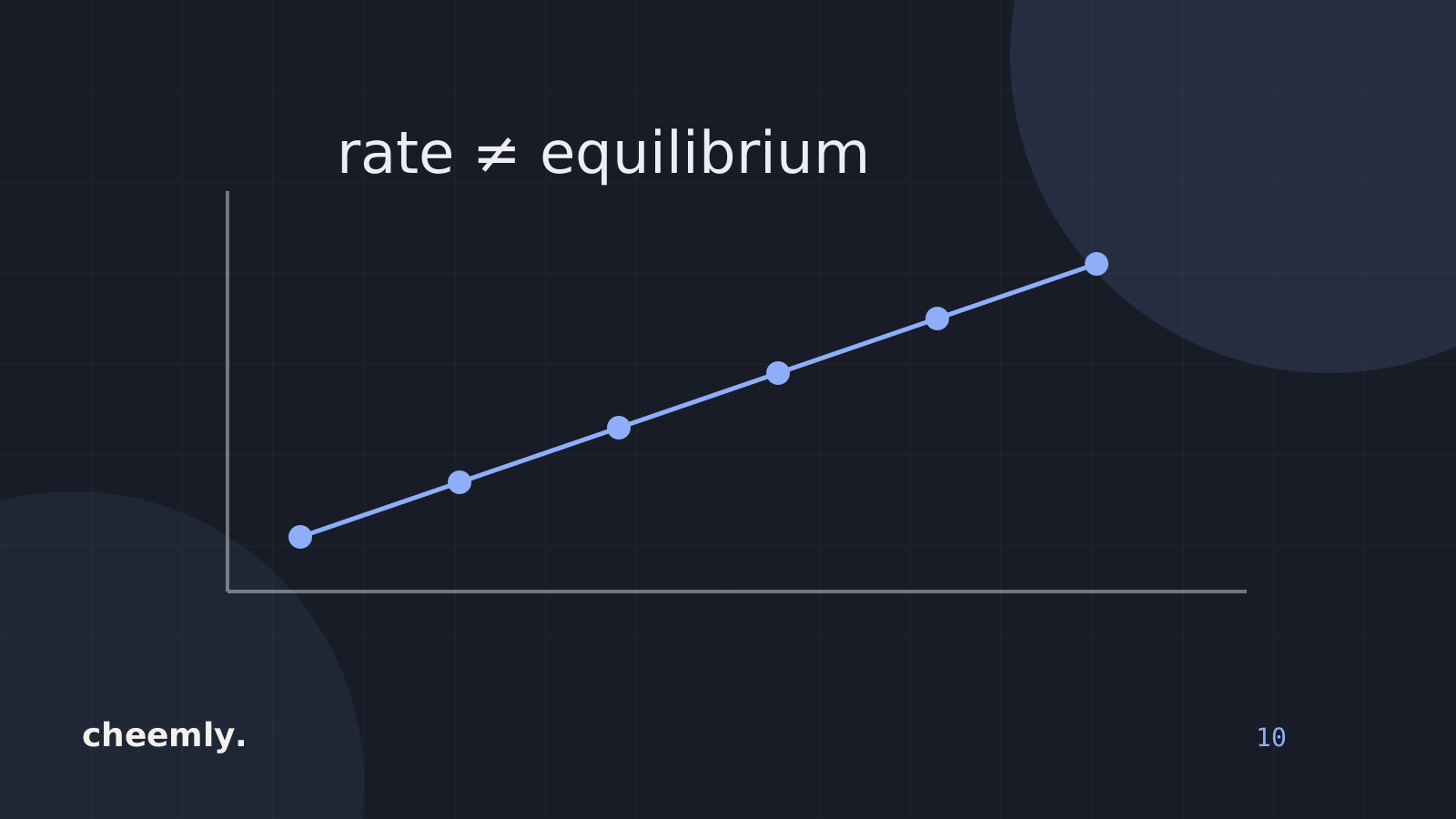
Two different questions
Kinetics concerns changes over time. Equilibrium relationships help evaluate composition under specified conditions. A rapidly proceeding reaction does not necessarily favour more product at equilibrium. Treat “how fast?” and “in what ratio?” as separate questions.
Read catalysis carefully
A catalyst can affect the time required to approach equilibrium by enabling suitable reaction pathways. At fixed temperature it does not change the equilibrium constant. Observing more product at an earlier sampling time is not, by itself, evidence of a different equilibrium.
Ask about sampling time, competing processes and whether the system had actually approached equilibrium.
Collect data for the intended question
A rate investigation follows an observable through time. An equilibrium investigation evaluates the appropriate equilibrium composition. A single endpoint generally cannot establish a detailed rate law.
Even a flattening trace can have explanations other than equilibrium, including measurement limits. Write down the question and identify which observations support it before drawing a conclusion.